


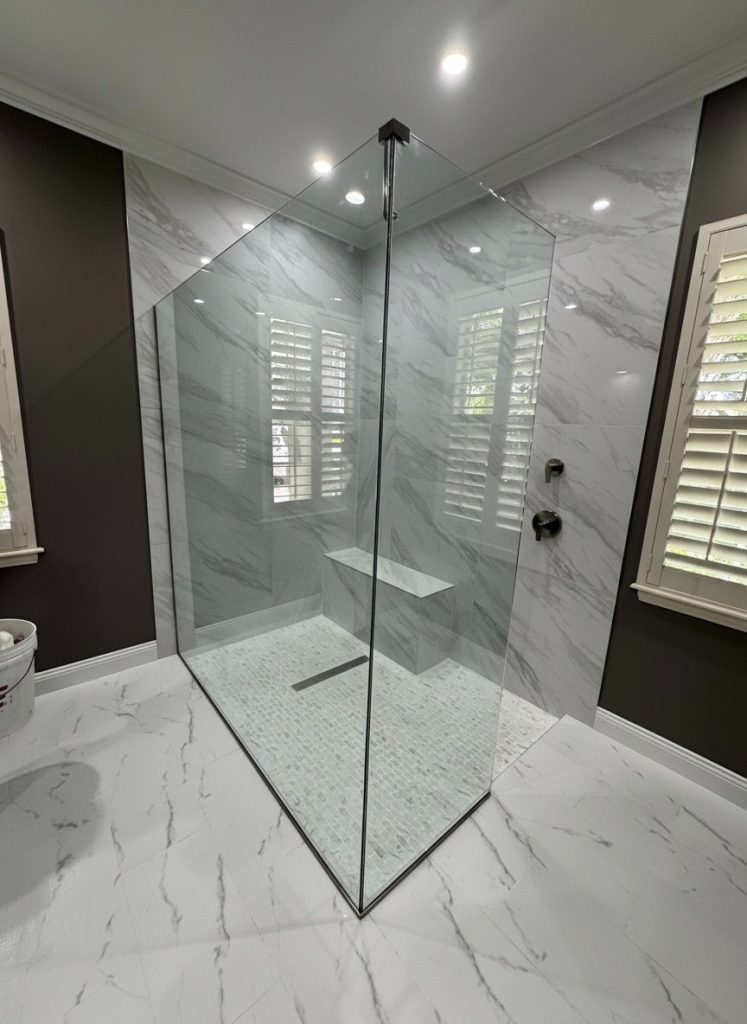
Frameless vs. Semi-Frameless Shower Enclosures: A Southwest Florida Buyer’s Guide
Introduction: Choosing the Right Shower Glass for Your Home
A custom shower enclosure is one of the most impactful upgrades you can make to a Southwest Florida bathroom. The right glass adds light, openness, and a clean, modern feel while increasing the value of your home. For many homeowners, the first decision is the most important one: frameless or semi-frameless.
Both options are excellent, but they differ in appearance, glass thickness, cost, and maintenance. This guide explains those differences so you can choose the best custom shower enclosure for your space, your budget, and our coastal climate.
Frameless vs. Semi-Frameless: What’s the Difference?
A frameless shower enclosure uses thick, self-supporting tempered glass with no surrounding metal frame. The panels are held by minimal hardware such as clips, hinges, and brackets. The result is a nearly seamless, high-end look that shows off your tile and keeps sightlines open in smaller bathrooms.
A semi-frameless shower enclosure uses lighter framing along some edges, often the perimeter or the fixed panels, while the door itself may remain frameless. Semi-frameless designs deliver a clean appearance at a more accessible price point and use thinner glass supported by the framing.
If you want the most open, luxurious result, frameless is usually the answer. If you want a polished look with strong value, semi-frameless is a smart choice. Either way, the same expert installation principles apply to your shower glass and glass doors.
Choosing the Right Glass Type and Thickness
Shower glass is always tempered safety glass, which is heat-treated to be far stronger than ordinary glass and to break into small, blunt pieces if it ever fails. Beyond that baseline, you have several choices that affect both look and performance.
Thickness. Frameless enclosures typically use 3/8-inch or 1/2-inch glass for rigidity and a substantial, premium feel. Semi-frameless designs commonly use 3/16-inch or 1/4-inch glass, which the framing helps support.
Clarity. Standard glass carries a slight green tint, while low-iron glass is nearly colorless and shows tile and stone in their true colors. Low-iron is a popular upgrade for high-end bathrooms.
Protective coatings. A factory-applied water-repellent coating helps shower glass shed water and resist the mineral spotting that is common with Southwest Florida’s hard water, making routine cleaning much easier.
Measuring and the Custom Installation Process
Every custom enclosure begins with precise measurement, because no two showers are perfectly square. A professional installer creates a template of your opening, accounting for tile variations, slope, and the exact placement of hinges and hardware.
Once the measurements are finalized, your glass is fabricated to order, then installed with hardware anchored into studs or properly rated wall anchors. Correct slope, sealing, and hardware placement are what keep a frameless enclosure watertight and operating smoothly for years.
This is why custom shower enclosures are not a do-it-yourself project. Professional templating and installation protect both the performance of the glass and the surrounding bathroom. To start with an in-home measurement, visit our contact page.
Caring for Shower Glass in a Coastal Climate
Southwest Florida’s humidity and hard water make routine care especially important. Squeegeeing the glass after each use is the single most effective habit for preventing mineral buildup and water spots.
For deeper cleaning, use non-abrasive, pH-neutral cleaners and a microfiber cloth to protect the glass and any coatings. Avoid harsh or gritty products that can scratch the surface or dull protective treatments over time.
The same coastal conditions that affect shower glass also affect windows, doors, and mirrors throughout your home. For a full overview of protecting every glass surface against salt air, humidity, and UV exposure, see our guide to glass maintenance and hurricane preparation for Southwest Florida homes.
What Influences the Cost of a Custom Shower Enclosure
Several factors determine the price of a custom enclosure. Frameless designs cost more than semi-frameless because they require thicker glass and more precise installation. Larger openings, low-iron glass, specialty coatings, and premium hardware finishes also affect the final figure.
Layout matters as well. A simple door-and-panel configuration is more economical than a multi-panel or neo-angle enclosure that wraps around a corner. During your consultation, an installer can recommend the configuration that best fits your bathroom and your budget.
Because shower glass pairs so naturally with other features, many homeowners coordinate their enclosure with custom mirrors for a unified, designer look across the bathroom. If yours is a smaller bathroom, our guide to custom mirror ideas for small bathrooms shows how to make the pairing work in tight spaces.
Conclusion: Investing in the Right Enclosure
Whether you choose frameless or semi-frameless, a professionally measured and installed shower enclosure is a lasting investment in comfort, style, and home value. Frameless delivers the most open, luxurious result, while semi-frameless offers a clean look with excellent value.
With the right glass type, proper installation, and simple coastal-climate care, your enclosure will look beautiful and perform reliably for many years. When you are ready to design yours, explore our shower enclosure services or reach out for a consultation.
Frequently Asked Questions
Are frameless shower doors safe?
Yes. Frameless enclosures use thick tempered safety glass that meets federal safety glazing standards. If it ever breaks, it crumbles into small, blunt pieces rather than sharp shards.
How thick should frameless shower glass be?
Most frameless enclosures use 3/8-inch or 1/2-inch tempered glass for rigidity and a premium feel, while semi-frameless designs typically use 3/16-inch or 1/4-inch glass supported by light framing.
Do frameless shower doors leak?
When professionally measured and installed with proper slope, seals, and hardware, frameless enclosures manage water effectively. Small intentional gaps allow airflow and do not cause leaks in a correctly built shower.
How long does a custom shower enclosure take to install?
After templating, custom glass is usually fabricated within one to two weeks. The on-site installation itself is typically completed in a few hours.
External Resource
For background on the federal safety standards that govern tempered glazing used in showers and doors, visit the U.S. Consumer Product Safety Commission.