


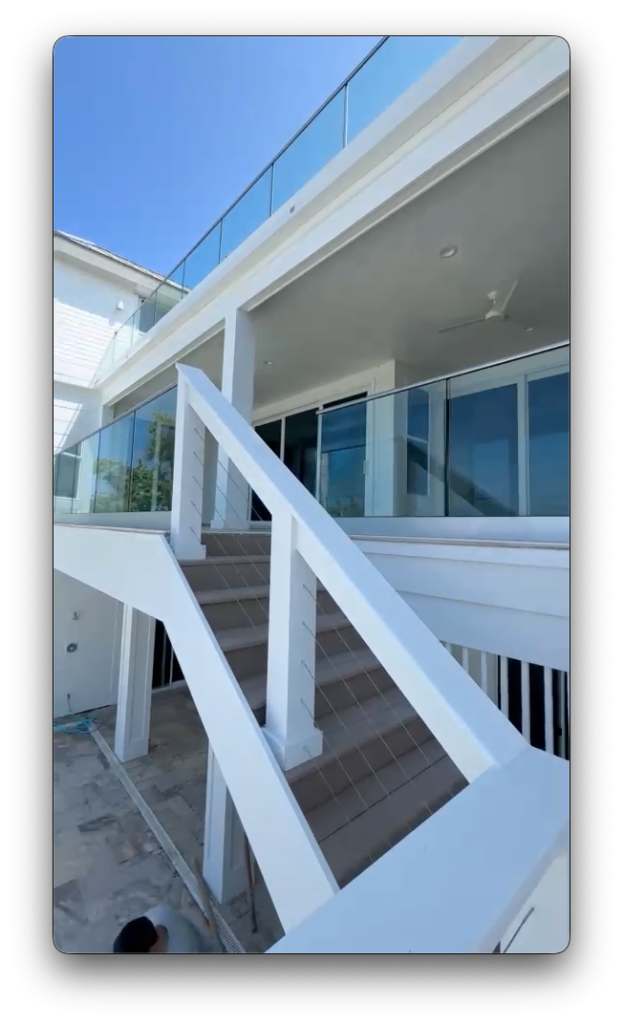
Glass railings have become increasingly popular in Southwest Florida’s residential market, offering unobstructed views of our beautiful Gulf Coast scenery while providing essential safety barriers. Whether you’re building a new waterfront home in Naples, renovating a condo balcony in Fort Myers Beach, or adding a pool deck railing in Cape Coral, understanding Florida’s specific requirements is crucial for a successful project.
As licensed SB-G contractors serving Lee, Collier, and Charlotte counties, we’ve navigated countless glass railing installations in Florida and understand the unique challenges our coastal climate presents. Here’s your comprehensive guide to making informed decisions about glass railings for your Southwest Florida property.
Glass Railing Styles: Options for Every Application
Frameless Glass Railings
Frameless systems offer the cleanest aesthetic and maximum visibility—perfect for showcasing Gulf views or pool areas. These systems use:
- Structural glazing: Glass panels connect directly to mounting points
- Minimal hardware: Reduces maintenance in salt air environments
- Continuous glass runs: Uninterrupted sightlines ideal for waterfront properties
- Modern appearance: Complements contemporary Southwest Florida architecture
Post-Mounted Glass Systems
Post-mounted railings use vertical supports between glass panels, offering:
- Enhanced structural support: Ideal for high-wind coastal areas
- Design flexibility: Accommodates curved or angled configurations
- Cost efficiency: Generally more budget-friendly than frameless options
- Easier maintenance access: Individual panel replacement when needed
Top-Rail Systems
These feature a continuous cap rail above the glass panels, providing:
- Additional structural integrity: Important for high-exposure coastal locations
- Handrail functionality: Meets accessibility requirements
- Material options: Aluminum, stainless steel, or composite materials
- Enhanced durability: Protects glass edges from direct weather exposure
Florida Building Code Requirements
Understanding Florida Building Code compliance is essential for any glass railing project. The code addresses several critical areas:
Wind Load Requirements
Southwest Florida’s location in Hurricane Zone requires specific wind load calculations:
- Design wind speeds: Typically 140-180+ mph depending on location and exposure
- Structural analysis: Required for all glass railing installations
- Engineered drawings: Must be sealed by a Florida-licensed engineer
- Impact resistance: Specific requirements for areas prone to windborne debris
Height and Spacing Standards
Florida code mandates specific dimensional requirements:
- Minimum height: 42″ for most residential applications
- Maximum opening: 4″ sphere cannot pass through any opening
- Load resistance: Must withstand 200 pounds of force applied horizontally
- Safety glazing: Tempered or laminated glass required for all applications
Coastal Construction Requirements
Properties in coastal areas face additional requirements:
- Corrosion resistance: All hardware must meet marine environment standards
- Impact glazing: Required in certain wind zones
- Foundation requirements: Enhanced anchoring for sand and coastal soils
- Drainage provisions: Proper water management around railing bases
Materials That Survive Florida’s Coastal Climate
Glass Selection
Choosing the right glass is crucial for long-term performance:
- Tempered safety glass: Standard requirement, 4-5 times stronger than regular glass
- Laminated glass: Offers impact resistance and hurricane protection
- Low-iron options: Provides crystal-clear appearance without green tint
- Protective coatings: Easy-clean treatments reduce salt and mineral buildup
Hardware and Fasteners
Marine-grade materials are essential in our salt air environment:
- 316 stainless steel: Superior corrosion resistance for coastal applications
- Aluminum alloys: Marine-grade options with protective finishes
- Structural glazing compounds: Weather-resistant adhesives and sealants
- Drainage systems: Prevent water accumulation and corrosion
Foundation and Mounting Systems
Florida’s sandy soils and water table require specific foundation considerations:
- Concrete footings: Properly sized for wind loads and soil conditions
- Corrosion-resistant anchors: Stainless steel or galvanized options
- Drainage provisions: Prevent undermining and water damage
- Expansion joints: Accommodate thermal movement in our climate
Indoor vs. Outdoor Applications
Balcony and Deck Railings
Outdoor applications face the most demanding conditions:
- Salt air exposure: Requires marine-grade materials and protective finishes
- UV resistance: All components must withstand intense Florida sunshine
- Thermal cycling: Materials must handle daily temperature variations
- Weather sealing: Critical for preventing water infiltration
Pool Deck Barriers
Pool areas require special consideration for safety and compliance:
- Child safety features: Self-closing, self-latching gate mechanisms
- Chemical resistance: Materials must withstand pool chemicals and cleaning products
- Slip resistance: Textured surfaces where required for safety
- Drainage compatibility: Integration with pool deck drainage systems
Interior Stair Railings
Indoor applications offer more controlled environments but still require:
- Building code compliance: Height, load, and safety requirements
- Design integration: Compatibility with interior architectural styles
- Maintenance access: Easy cleaning and occasional hardware service
- Safety considerations: Appropriate for household occupants
Cost Factors for Glass Railing Projects
Understanding what affects glass railing costs in Florida helps with project planning:
Design Complexity
- Linear runs: Most cost-effective configuration
- Curved sections: Require custom fabrication and specialized hardware
- Multi-level installations: Additional structural considerations
- Integration challenges: Existing structure modifications
Material Selections
- Glass type and thickness: Standard tempered vs. laminated or specialty glass
- Hardware grade: Standard vs. marine-grade materials
- Finish options: Basic vs. premium protective coatings
- Structural requirements: Standard vs. enhanced wind load designs
Site Conditions
- Access challenges: Difficult-to-reach installations increase labor costs
- Foundation requirements: Soil conditions and drainage needs
- Permit and inspection fees: Vary by jurisdiction
- Timeline constraints: Rush projects may incur premium pricing
Why You Need a Licensed SB-G Contractor
In Florida, glass railing installation requires specific licensing and expertise:
SB-G License Requirements
The Sheet Metal/Glazing (SB-G) license ensures contractors have:
- Technical knowledge: Understanding of glazing systems and installation techniques
- Building code expertise: Current knowledge of Florida requirements
- Insurance and bonding: Protection for property owners
- Continuing education: Ongoing training on industry developments
Engineering Requirements
Glass railing projects typically require:
- Structural calculations: Wind load and safety factor analysis
- Sealed drawings: Professional engineer approval
- Building department approval: Permit review and inspection
- Code compliance verification: Ensuring all requirements are met
Quality Assurance
Licensed contractors provide:
- Warranty protection: Coverage for materials and workmanship
- Ongoing support: Maintenance and service capabilities
- Industry relationships: Access to quality materials and suppliers
- Problem resolution: Resources for addressing issues
Maintenance in Florida’s Environment
Proper maintenance ensures long-term performance and appearance:
Regular Cleaning
- Salt removal: Weekly rinsing for coastal properties
- Glass cleaning: Appropriate products and techniques
- Hardware inspection: Check for corrosion or loosening
- Sealant monitoring: Ensure weather seals remain intact
Seasonal Inspections
- Hurricane season preparation: Pre-storm inspections and maintenance
- Post-storm assessment: Checking for damage or loosening
- Annual professional review: Comprehensive system evaluation
- Preventive maintenance: Addressing issues before they become problems
Frequently Asked Questions
How do glass railings perform during Florida hurricanes?
When properly designed and installed according to Florida Building Code, glass railings can withstand hurricane-force winds. The key is using impact-resistant glass and ensuring proper engineering for your specific location’s wind load requirements. Many coastal properties successfully weathered recent hurricanes with minimal damage to properly installed glass railing systems.
What’s the typical lifespan of glass railings in Southwest Florida’s salt air environment?
Quality glass railings with marine-grade hardware typically last 15-25 years in coastal environments with proper maintenance. The glass itself can last much longer, while hardware components may need occasional service or replacement depending on exposure levels and maintenance practices.
Are there restrictions on glass railing installations in HOA communities?
Many HOA communities have architectural guidelines governing railing materials and designs. It’s important to check your community’s covenants before beginning a project. Most communities appreciate glass railings for their clean appearance and view preservation, but approval is typically required before installation.
Planning Your Glass Railing Project
Successful glass railing installation requires careful planning and professional expertise. Consider these factors when planning your project:
- Design goals: Balance aesthetics with functionality and code compliance
- Environmental exposure: Coastal vs. inland location requirements
- Budget considerations: Initial cost vs. long-term value and maintenance
- Timeline planning: Permit processing, fabrication, and installation scheduling
- Professional selection: Choosing qualified, licensed contractors
Glass railings offer an excellent solution for Southwest Florida properties, providing safety, durability, and unobstructed views of our beautiful surroundings. When properly designed and installed, they enhance property value while standing up to our challenging coastal environment.
Ready to explore glass railing options for your property? Contact Florida Glass Company today at (239) 275-3757 for a professional consultation. Our licensed SB-G contractors will help you design and install glass railings that meet all code requirements while enhancing your Southwest Florida lifestyle.